Eyes are unforgiving. A splash of cleaning chemical, a flying metal chip from a grinder, a knock from a swinging tool — any of these can threaten someone's sight in seconds, and with an eye injury what you do in the first minute often decides the outcome. This guide covers the common workplace eye injuries, exactly what to do for each, when it's a 999 call, and what UK employers must have in place so the response is quick enough to matter.
Common eye injuries at work
The right first aid depends entirely on what happened, so the first thing to establish is the type of injury:
| Injury | Typical cause |
|---|---|
| Chemical splash / burn | Cleaning products, bleach, solvents, cement, battery acid, plating and lab chemicals — common in labs, factories and salons. |
| Foreign body / dust | Grit, sawdust, metal filings or an eyelash on the surface of the eye — grinding, cutting, woodwork and sanding. |
| Penetrating / embedded object | A metal chip, nail or splinter driven into the eye — high-speed tools, hammering and nail guns. |
| Blunt trauma | A knock from a tool, ball, door or flying debris causing bruising or a "black eye". |
| Flash burn (arc eye) | Welding without eye protection, or strong UV — pain and grittiness hours later. |
Chemical splash: flush first, flush long
A chemical in the eye is the one true eye emergency where seconds count. Corrosives — alkalis especially (cement, bleach, drain cleaner) — keep burning until they are physically washed out, so irrigation is the whole treatment. Start before you know what the chemical was:
- Get the casualty to the nearest eye wash or clean running water immediately.
- Tilt the head so the injured eye is lowest, and rinse so water runs away from the uninjured eye rather than across it.
- Gently hold the eyelids apart — the eye will want to clamp shut — and flood the whole surface with a steady stream.
- If a contact lens doesn't float out in the first few seconds, remove it so the chemical isn't trapped underneath, then keep rinsing.
- Keep irrigating for at least 15 minutes for a corrosive. Don't stop because the pain eases.
- Call 999 for any corrosive or if sight is affected; keep flushing on the way, and take the product or safety data sheet with you.
Foreign body or dust
A loose particle sitting on the white of the eye can usually be washed out. The golden rule is don't let them rub it — rubbing can scratch the cornea or drive the particle in.
- Ask the casualty not to rub and to blink a few times — tears may shift it.
- Flush with clean water or sterile eye wash, or gently pull the upper lid over the lower to brush the particle off.
- If it won't move, is on the coloured part of the eye, or is stuck — stop. Cover the eye and send them for medical help.
Embedded or penetrating object: do not remove
If something is stuck in or through the eyeball, never try to pull it out and never press on the eye. Removing it can cause the eye to lose fluid and permanent damage.
- Leave the object exactly where it is.
- Ask the casualty to keep both eyes as still as possible — the eyes move together, so cover the uninjured eye too to stop it tracking around.
- Support the head, place a loose sterile pad or cup around (not pressing on) the eye if you can, and call 999.
- Keep them calm and still until help arrives.
Blunt trauma and flash burn
For a knock to the eye, apply a cold compress (not pressure) to reduce swelling and watch for warning signs below — any loss or blurring of vision, or blood visible in the eye, means urgent medical assessment. For a welding flash burn, the pain often arrives hours later: get the casualty out of the light, don't let them rub, and arrange medical advice, as it can need treatment.
Is an eye injury RIDDOR reportable?
Often, yes — and getting this wrong is a compliance gap. Under the Reporting of Injuries, Diseases and Dangerous Occurrences Regulations (RIDDOR):
- Any injury causing permanent loss of sight or reduction in sight, and any chemical or hot-metal burn to the eye, is a specified injury that must be reported to the HSE.
- If an eye injury keeps a worker off work or unable to do their normal duties for more than seven consecutive days, it's a reportable over-seven-day injury.
- Either way, record it in your accident book — every eye injury goes in the book even when it isn't RIDDOR reportable, and the record is what proves you met your duties.
What employers must have in place
The Health and Safety (First-Aid) Regulations 1981 require "adequate and appropriate" provision, and your first aid needs assessment is where you decide what that means for your eye-injury risks. In practice that usually means:
- Eye irrigation at the point of risk — clean mains water immediately to hand for low risk, sealed sterile eye wash by dusty or foreign-body hazards, and a plumbed or self-contained station for corrosives.
- The right kit — a BS 8599-1 kit includes a sterile eye pad with bandage; check it's part of what's in your kit.
- Trained first-aiders who know not to remove embedded objects and to flush chemicals long — see first-aider duties.
- Prevention — the real fix is eye protection and guarding so the splash or chip never reaches the eye; first aid is the backstop.
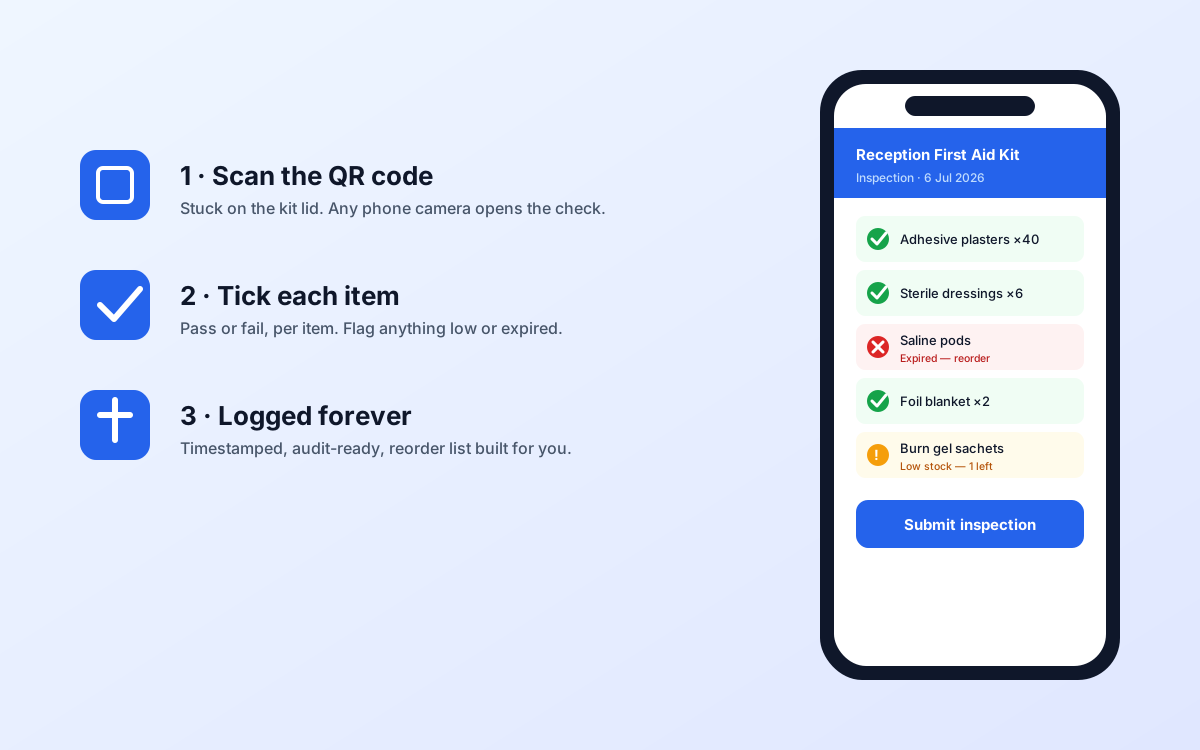
The gear only helps if it's there, sealed and in date when the splash happens. Sterile eye wash has a shelf life and plumbed stations need flushing, yet both are the items most often found expired on an HSE inspection. That's exactly what KitCompliance tracks: add every eye-wash bottle and kit item, log inspections in seconds, and get reminded before anything lapses — with a one-click report that proves your provision. See the getting-started guide to set it up.
Frequently asked questions
Should you remove something stuck in the eye?
No. Never try to remove anything embedded in the eyeball or a particle on the coloured part of the eye, and don't rub or press. Cover the eye, keep the casualty still, and call 999 or get to A&E. Only loose dust or an eyelash on the white of the eye should be flushed out with clean water or sterile eye wash.
Is an eye injury at work RIDDOR reportable?
It can be. Permanent loss or reduction of sight, and chemical or hot-metal burns to the eye, are specified injuries reportable to the HSE. An eye injury that stops normal work for more than seven consecutive days is a reportable over-seven-day injury. Log every eye injury in the accident book regardless.
How long should you flush a chemical splash?
At least 15 minutes of continuous irrigation for a corrosive or unknown chemical, longer if advised — and flush first, before identifying the chemical. One eye-wash pod isn't enough for a corrosive; that's what a continuous-flow station is for.
What should the kit have for eye injuries?
A BS 8599-1 kit includes a sterile eye pad with bandage. Add sealed sterile eye wash next to dusty or chemical hazards, and a plumbed or self-contained station for corrosives. Your needs assessment sets the level.