"What happens if I get it wrong — can I be sued?" is the question almost every new workplace first-aider asks, and it stops some people volunteering at all. The honest answer: a first-aider acting in good faith, within their training, is very unlikely to face a successful claim — and in a workplace the law puts most of the responsibility on the employer, not the individual. This guide explains exactly what protects a UK workplace first-aider, what the SARAH Act 2015 does, and the practical steps employers should take.
Can a first aider actually be sued?
In theory anyone can bring a claim; in practice a successful negligence claim against a first-aider is extremely rare, and there is no well-known UK case of a workplace first-aider being personally held liable for helping in good faith. For a claim to succeed, a court would have to find that the first-aider owed a duty of care, breached it by acting unreasonably, and caused harm as a result. Someone who sticks to what they were taught, does not attempt procedures beyond their training, and acts to help — not to show off — clears that bar comfortably.
The bigger legal risk for a first-aider is usually not acting when they should, or acting recklessly outside their competence — not the act of giving reasonable first aid itself.
Why the employer carries most of the risk
A nominated workplace first-aider is an employee performing a duty on the employer's behalf. Under the principle of vicarious liability, an employer is responsible for the acts of employees carried out in the course of their employment. So if a claim ever did arise from first aid given at work, it would normally be directed at — and defended by — the employer, not the individual first-aider. This is one reason the role sits firmly with the employer's wider duty: see who is responsible for first aid at work.
Does employers' liability insurance cover it?
Almost always, yes. The Employers' Liability (Compulsory Insurance) Act 1969 requires virtually every UK employer to hold at least £5 million of employers' liability cover. That cover extends to employees carrying out duties on the employer's behalf — including nominated first-aiders and appointed persons. Two things worth confirming with your insurer:
- First-aid duties are not specifically excluded from the policy.
- Any volunteer first-aiders or appointed persons are included as people acting for the business.
Public liability insurance may also respond where a member of the public is treated — relevant if you include visitors and the public in your provision, as the HSE recommends.
The SARAH Act 2015
The Social Action, Responsibility and Heroism Act 2015 (often called the "SARAH Act") applies to negligence claims in England and Wales. It requires a court to consider whether the person was:
| The court must consider whether the person… | In plain terms |
|---|---|
| Was acting for the benefit of society | Stepping in to help someone, rather than acting for personal gain. |
| Demonstrated a generally responsible approach | Took a sensible, careful approach to safety — e.g. was trained and acted within it. |
| Was acting heroically | Intervened in an emergency to help someone in danger, without regard to their own safety. |
The Act does not grant immunity and does not change the basic test for negligence — but it signals that the law is on the side of people who act responsibly to help others. For a trained first-aider doing their job, it is another layer of reassurance, not something they need to invoke.
Consent: treating someone — or being refused
A conscious adult with capacity must consent before being treated, and is entitled to refuse first aid even if that seems unwise. A first-aider should explain what they want to do and get agreement where possible. If a casualty is unconscious, confused or otherwise unable to consent, a first-aider may act in the person's best interests on the basis of implied consent — the law assumes a reasonable person would want life-saving help. Acting reasonably, and only within training, is again the protection. If an adult refuses, respect it, call 999 if needed, and record what happened.
How to make sure your first-aiders are covered
Five practical steps for employers:
- Keep training current. Use HSE-recognised FAW or EFAW courses and renew every three years so first-aiders only ever act within what they have been taught (see annual refresher training).
- Confirm the insurance. Check your employers' liability policy covers first-aid duties and anyone who performs them for you.
- Define the role in writing. Set out scope and limits in your first aid policy so it is clear the first-aider acts for the employer, not personally.
- Record every incident. A contemporaneous treatment record is the best evidence that the first-aider acted reasonably and within training.
- Support your people. Offer refreshers and a debrief after serious incidents so first-aiders stay competent and confident.
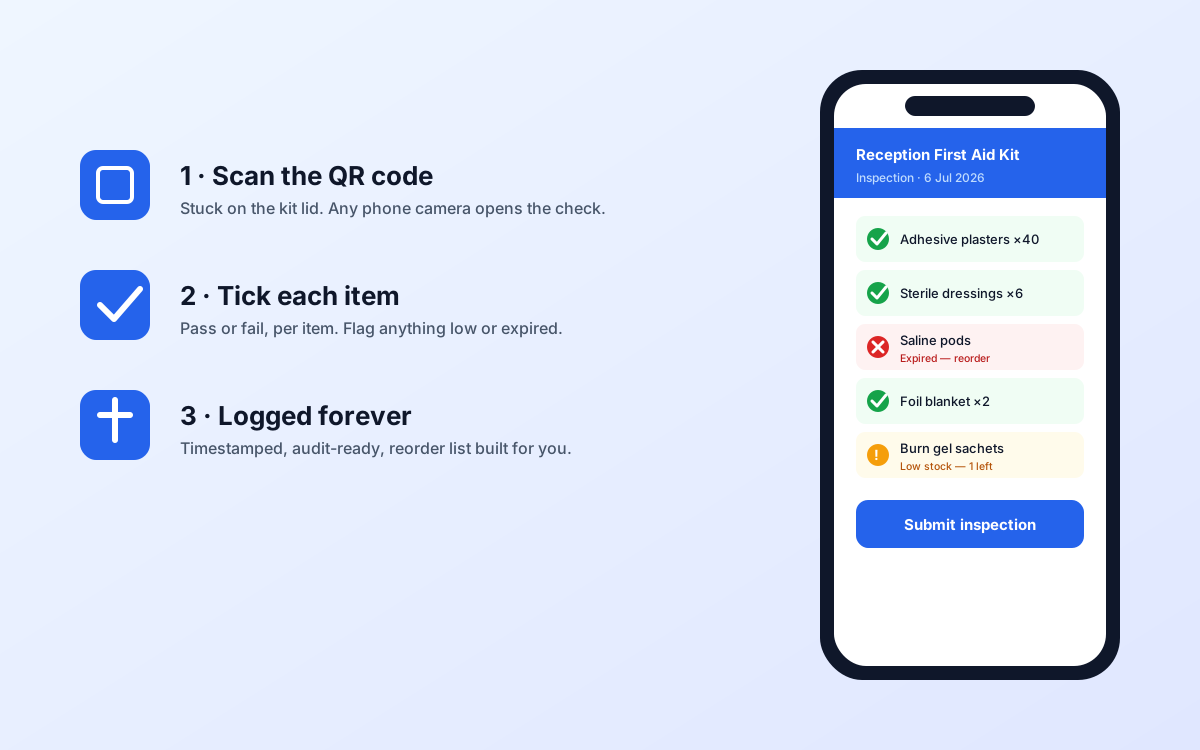
The thread running through all of this is simple: a first-aider is protected when they are properly trained, in date, acting within that training, and able to show it. That's exactly what KitCompliance makes effortless — track every first-aider's certificate and renewal date, log treatment records and kit inspections in seconds, and get reminders before any training or kit lapses, with a one-click report that proves your provision. See the getting-started guide to set it up.
Frequently asked questions
Can a workplace first aider be sued?
In practice it is extremely rare. A first-aider acting in good faith, within their training and in the casualty's best interests is very unlikely to face a successful claim. Where they are an employee acting in the course of their duties, liability normally rests with the employer through vicarious liability, and the courts also weigh the SARAH Act 2015 in favour of people who help.
Does employers' liability insurance cover first-aiders?
Yes, in almost all cases. UK employers must hold at least £5 million of employers' liability cover, which normally covers employees carrying out first-aid duties for the business. Confirm first aid is not excluded and that appointed persons and volunteers are included.
What is the SARAH Act 2015?
The Social Action, Responsibility and Heroism Act 2015 requires a court, when deciding a negligence claim, to consider whether the person was acting for the benefit of others, took a responsible approach, or acted heroically. It does not grant immunity but tilts the balance towards those who step in to help.
Can a first aider treat someone without consent?
A conscious, capable adult must consent and can refuse. If someone is unconscious or unable to consent, a first-aider may act in their best interests on implied consent. Acting reasonably and within training is the key protection.
Do first-aiders need their own personal insurance?
Not for workplace duties — the employer's liability insurance covers them. Personal indemnity is only worth considering for volunteering outside work, and even then the SARAH Act offers protection.