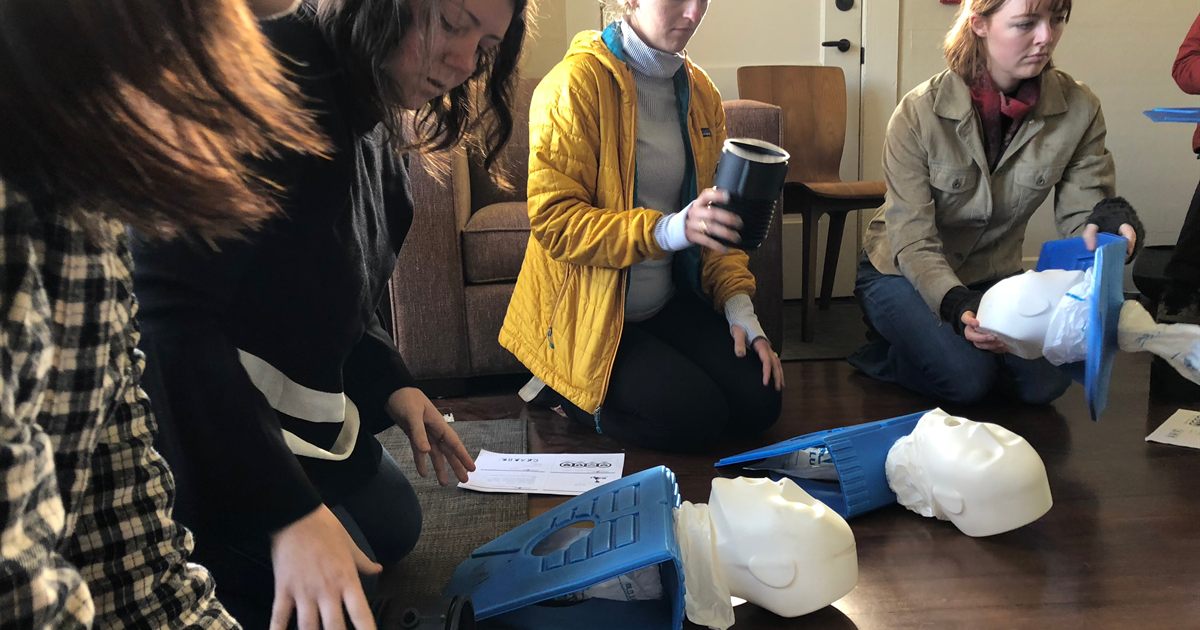
Agency, temporary, seasonal and casual workers sit in an awkward gap. Their contract is with the agency, but they turn up and work on your site, under your supervision. So when one of them cuts a hand or faints, whose first-aider treats them — and whose job was it to make sure there was one? This guide sets out the UK position and the simple rule that keeps you compliant.
The agency is the employer — so why is it my problem?
It's true that for a pay slip, a contract and PAYE the agency is the legal employer. But UK health-and-safety law doesn't hang first-aid duties on the payroll — it hangs them on control. The Health and Safety (First-Aid) Regulations 1981 require every employer to provide "adequate and appropriate" first-aid provision for its employees, and the Health and Safety at Work etc. Act 1974 (section 3) goes wider: you must protect the health and safety of people who are not your employees but are affected by your work. An agency worker on your floor, using your equipment, is squarely inside that duty.
The agency can't discharge it for you — it doesn't control your building, doesn't know where your kits are and isn't there when something happens. On-site first aid is, in practice, always the host employer's job. For the bigger picture of who owes what, see who is responsible for first aid at work.
Do they count towards my first-aider numbers?
Yes. There is no fixed legal ratio of first-aiders to staff — it falls out of your needs assessment — but whatever number you land on has to cover everyone present, not just the permanent payroll. A warehouse that runs on 20 permanent staff but 60 agency pickers at peak needs first-aid cover for the busy figure, across every shift the agency staff actually work.
Two things people forget:
- Shift patterns. Temporary staff often work evenings, nights and weekends when your permanent first-aiders have gone home. Cover has to follow the hours, not the headcount — the same trap as holidays and absence.
- Higher-risk tasks. If agency workers do the manual-handling, machinery or construction work, your assessment should reflect that risk level for them, not the office average.
Agree it in writing before the placement starts
The agency isn't off the hook entirely — it has a duty to give workers general health-and-safety information and not to place them somewhere unsafe. The clean way to avoid gaps is a short written split of responsibilities before anyone starts:
| Task | Usually the host employer | Usually the agency |
|---|---|---|
| On-site first aid kits, first-aiders & signage | ✓ | |
| Including the worker in the needs assessment headcount | ✓ | |
| Site induction (kit locations, first-aiders, raising alarm) | ✓ | |
| General H&S briefing before placement | ✓ | |
| Confirming the worker is fit for the role | ✓ | |
| Recording any injury in the accident book | ✓ (host, where it happened) |
If a temporary worker is injured on your site, it's your accident book and RIDDOR duty — the incident happened under your control. Log it the same way you would for a permanent employee.
Contractors and shared premises are a different case
Agency workers are directed by you, so you fold them into your own provision. Genuinely self-employed contractors and other employers sharing your building are different — each has its own first-aid duty, and the law asks you to cooperate and coordinate rather than simply absorb them. Who provides the kit, who the first-aiders cover and how you'll reach each other in an emergency should be agreed up front. For the full picture on visitors, contractors and the public, see first aid for non-employees.
A four-point checklist for every temporary worker
- Counted. They're in the headcount your needs assessment uses to size first-aider and kit numbers.
- Covered. There's a trained first-aider on the shifts they actually work, not just the day shift.
- Informed. Day-one induction tells them where kits and first-aiders are and how to raise the alarm.
- Recorded. Any injury goes in your accident book and is checked against RIDDOR — regardless of who employs them.
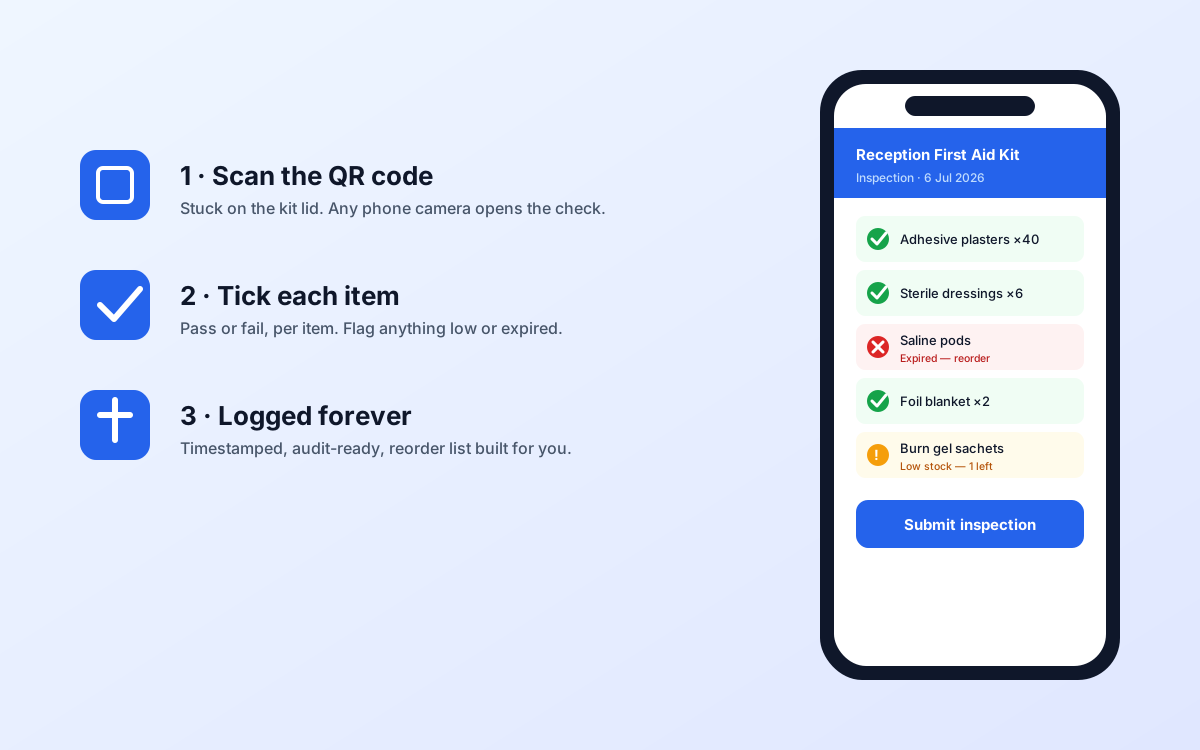
The hard part isn't the law — it's keeping cover true when your headcount swings with agency demand and shifts run around the clock. That's exactly what KitCompliance is built for: track every kit and its location, log inspections in seconds, and keep first-aider certificates in date with reminders before anything lapses — so you can prove, on any day, that provision covered everyone who was actually on site. See the getting-started guide to set it up.
Frequently asked questions
Who is responsible for first aid for agency workers — the agency or the host employer?
In practice the host employer. The agency is the legal employer for pay and contract, but the host controls the work and the premises, so under the Health and Safety at Work Act 1974 it must ensure agency workers' safety on site — including first-aid cover. Treat them like your own employees: count them and induct them.
Do agency and temporary workers count towards my first-aider numbers?
Yes. Provision must cover everyone present, so include agency, temporary, seasonal and casual staff in the headcount you use to size your first-aider and kit numbers — across every shift they work.
Should the agency provide first aid training for its workers?
The agency should brief workers on general health and safety, but it can't provide first-aid cover on a site it doesn't control. On-site kits, first-aiders and signage are the host employer's job. Agree the split in writing before the placement.
Do temporary workers need to know where the first aid kit is?
Yes — and it's where most workplaces slip. Cover kit locations, first-aider names and how to raise the alarm in the day-one induction, exactly as you would for a new permanent starter.