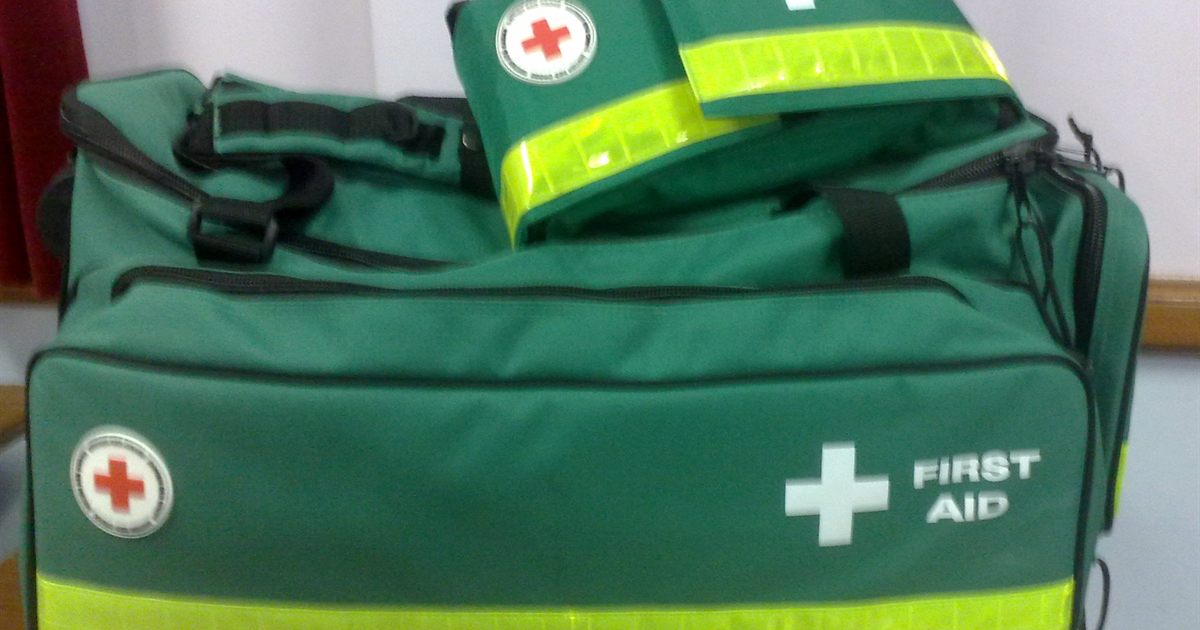
An event is a temporary workplace with extra people in it — often a lot of them, sometimes outdoors, sometimes with alcohol or physical activity in the mix. That combination is exactly why first aid at events is planned separately from your day-to-day office or site provision. This guide covers what the law actually requires, how to work out the level of cover from the risk, rough first-aider ratios by crowd size, the kit and equipment to provide, and how to record it so you can prove the decision.
Is event first aid a legal requirement?
There are two overlapping duties, and it helps to keep them separate.
- To your workers. The Health and Safety (First-Aid) Regulations 1981 require every employer to provide "adequate and appropriate" first aid equipment, facilities and people for employees — and that includes staff and volunteers working at your event.
- To attendees. The Regulations don't strictly cover members of the public, but the Health and Safety at Work etc. Act 1974 and your common-law duty of care do. HSE strongly recommends you include the public in your provision, and in practice a licence condition, the landowner or your insurer will require medical cover as a condition of the event going ahead.
So while "you must have X first-aiders" is rarely written into law for a given event, the effect is that any public event needs planned first aid provision, decided by a documented risk assessment. For licensable events the local authority Safety Advisory Group (SAG) will usually want to see that plan.
How to work out the level of cover
The accepted method is risk scoring, not a flat headcount. The industry-standard reference is The Purple Guide to Health, Safety and Welfare at Music and Other Events (published by the Events Industry Forum), whose medical chapter gives a points-based model. You score the event across factors such as:
- Expected number of attendees and crowd density.
- Audience profile — a family fun day, a seated concert and a full-contact sports event carry very different risks.
- Whether alcohol or drugs are likely to feature.
- The activities on offer, and any hazardous ones (fireworks, water, motorsport, height).
- Time of year, weather exposure and whether it is indoor or out.
- Access for ambulances and distance to the nearest A&E — a remote or rural site needs more on-site capability.
The higher the score, the higher the level and grade of cover — from first-aiders through to first responders, ambulances and an on-site treatment facility for major events. The five steps below turn that into a plan.
| Step | What to do |
|---|---|
| 1. Scope the event | Record type, expected attendees, duration, indoor/outdoor, and distance to A&E. |
| 2. Score the risk | Use The Purple Guide model to weight audience, activities, alcohol, weather and access. |
| 3. Set the cover | Convert score and crowd size into the number and grade of first-aiders, plus any ambulance or treatment facility. |
| 4. Provide kit & a treatment point | Place BS 8599-1 kits and an AED for quick reach; sign an accessible first aid point at larger events. |
| 5. Record & brief | Put it in the event safety plan, brief staff and stewards, and log any treatment on the day. |
First aider ratios by crowd size (rough guide)
These are starting points only — the risk score moves them up or down, and larger or higher-risk events need higher clinical grades and professional ambulance cover, not just more first-aiders. A long-used baseline is around one first-aider per 1,000 attendees for a low-risk event. Use the table to sanity-check your plan, never as the plan itself.
| Approx. attendees | Typical low-risk starting point |
|---|---|
| Up to 250 | 1–2 trained first-aiders and a stocked kit; still assess and record it. |
| 250–1,000 | 2–3 first-aiders, kits at each key area, an AED on site. |
| 1,000–3,000 | A first aid team with a signed treatment point and a lead with higher-level training. |
| 3,000+ | Professional event medical provider — first responders, ambulance(s) and a defined command structure. |
Kit and equipment for events
Whatever the size, the physical provision follows the same standards as any other workplace:
- First aid kits — British Standard BS 8599-1 kits, sized to the number of people and the risk level, placed so one is within quick reach of every zone. See how many first aid kits you need.
- A defibrillator (AED) — strongly recommended for any sizeable gathering; sudden cardiac arrest can happen to anyone. See workplace defibrillator requirements.
- A first aid point — a clearly signed, accessible, sheltered space for treatment; for bigger events this grows into a staffed first aid room or medical tent.
- Extras for the specific risk — eye wash for dusty or chemical activities, burn dressings near catering or pyrotechnics, foil blankets for cold or wet conditions, and plenty of water.
- Communications — a reliable way for stewards to summon first aid and, if needed, call an ambulance and guide it in.
Common mistakes
- Booking cover on a flat headcount and ignoring the risk multipliers (alcohol, weather, activity) that actually drive demand.
- Forgetting the event is also a workplace — no needs assessment for the staff and volunteers running it.
- Kits that are unstocked or out of date on the day because nobody checked them before they went out.
- No plan for ambulance access, or no one briefed to guide the crew to the casualty.
- No record of what cover was provided or what treatment was given — leaving nothing to show if it's ever questioned.
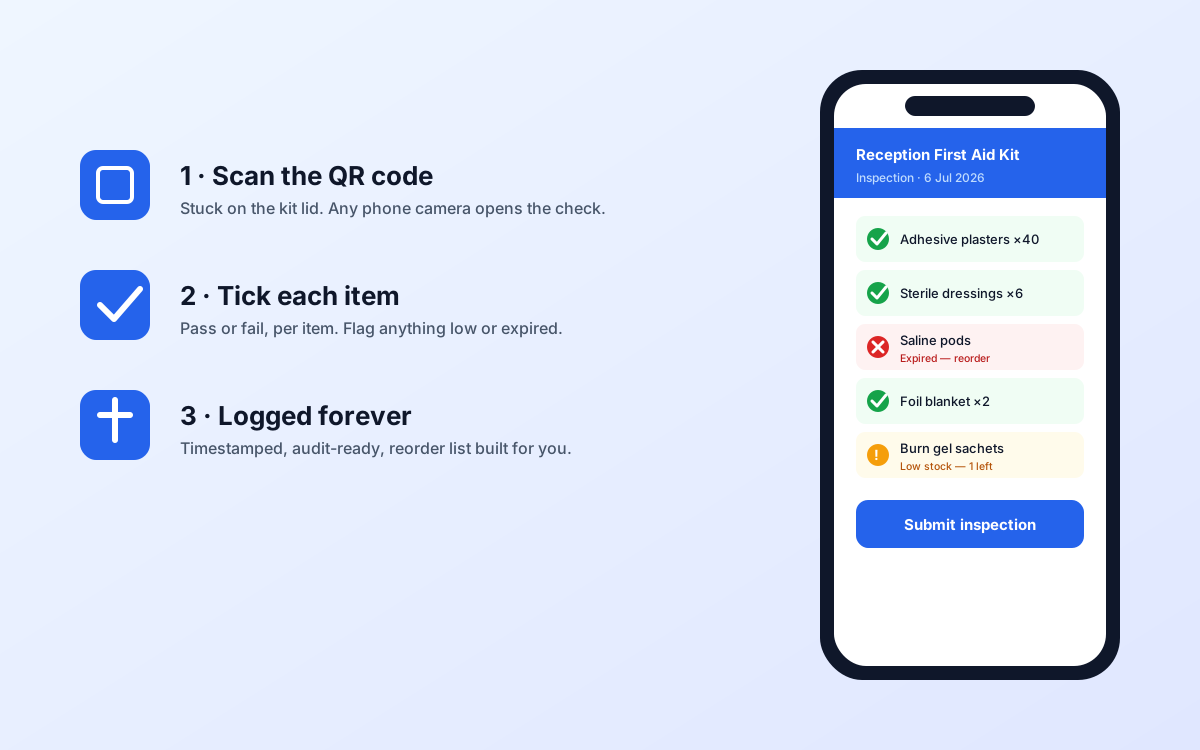
The plan decides the cover; the kits still have to be right on the day. Events multiply the problem — several kits going out to several zones, often reused across a season of fixtures. That's exactly what KitCompliance handles: build each event kit from the BS 8599-1 / ISO 45001 suggested list, run a 60-second inspection before it ships, get reminders before anything expires, and keep a one-click report that proves what you provided. See the getting-started guide to set it up.
Frequently asked questions
Do I legally need first aiders at an event?
If you employ staff or volunteers, the 1981 Regulations require first aid cover for them. You also owe a duty of care to attendees, and a licence or the landowner will usually make medical cover a condition of the event. In practice almost every public event needs planned provision set by a risk assessment.
How many first aiders do I need at an event?
There's no fixed legal ratio. A rough starting point is about one first-aider per 1,000 attendees for a low-risk event, then adjusted up for alcohol, weather, audience age and activities. Purple Guide risk scoring is the accepted way to set the real number.
What is The Purple Guide?
It's the industry-standard guidance for music and other events, published by the Events Industry Forum. Its medical and welfare chapter gives the risk-scoring model organisers use to calculate the level of first aid and medical cover a specific event needs.
Do small events need first aid cover?
Yes, in proportion to the risk. A small, low-risk gathering may only need a trained first-aider and a stocked kit — but you still have to assess it and record the decision, and your duty to provide first aid for any staff or volunteers always applies.